
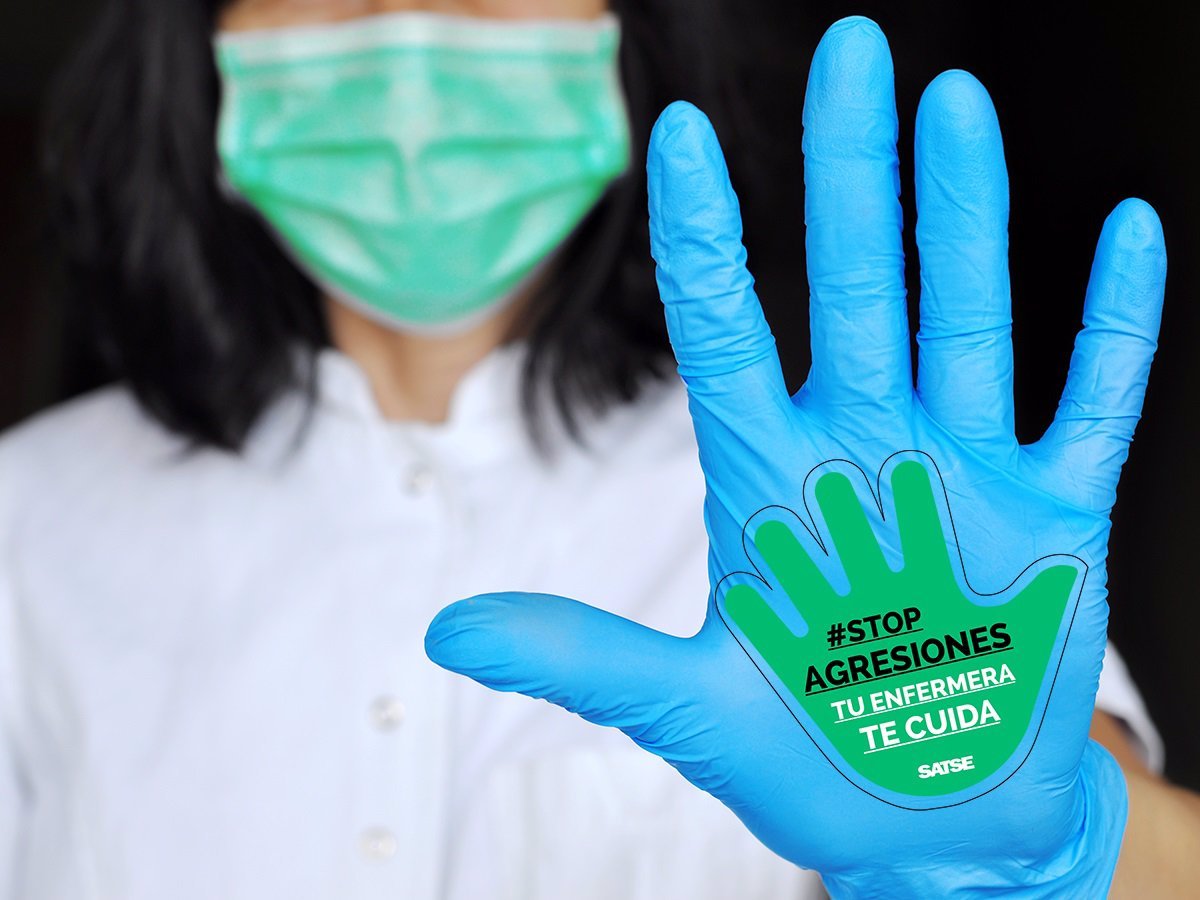
The union organization has pointed out that this «lamentable reality» is part of the daily life of healthcare personnel, and that the recent cases reported by SATSE, which have sparked protests in Castilla y León, Catalonia, Andalusia, and Galicia, are «another example that people’s dissatisfaction with the functioning of the healthcare system is manifested in violent and offensive attitudes.»
«If the public budget allocated to Healthcare is cut for years and then barely increases, problems multiply and create an environment conducive to dissatisfaction and discomfort among patients and their families, which unfortunately erupts against the person closest to them, who tends to be blamed for something that is not only not their fault, but that they also suffer from,» the union has pointed out.
In this sense, it has been explained that situations that increase the discomfort of patients and their families include prolonged waits to be attended, stays in hallways and stretchers, and the cancellation of scheduled surgical interventions, all resulting from persistent «precarity.»
This situation is compounded by other causes such as the lack of recognition of professionals as authorities, the lack of knowledge about the activities and circuits that different professionals must carry out, and the prevailing social tension, which is why SATSE has affirmed that «aggression is never the solution,» emphasizing the need to have healthcare and social healthcare centers with an adequate number of professionals so that everyone can have their care needs met in a reasonable time.
Although SATSE has acknowledged that the problem is «not simple» and requires various interventions in different areas, it has reiterated that both the government and the health departments, as well as private companies, only implement «palliative measures» and victim support that are «partial and insufficient patches.»
According to the latest report from the Ministry of Health, there were a total of 16,558 aggressions against healthcare professionals in 2024, a «record number»; 78 percent were directed at women and nearly 27 percent had a nurse as the victim, with SATSE noting that many of these aggressions are not reported.
«Zero tolerance, always and in any situation, we must not accept aggression as inherent to our work,» SATSE has stated, emphasizing the importance of not allowing any violent act to go unnoticed.
The union has highlighted that 80 percent of nurses have reported experiencing one or more cases of verbal (threats, insults, disparagement) or physical (shoving, hitting, punching) aggression, and has emphasized that nurses are a group «especially affected by this serious issue,» mainly due to their «close relationship» with patients and their families, both in healthcare facilities and in patients’ homes.
FUENTE