
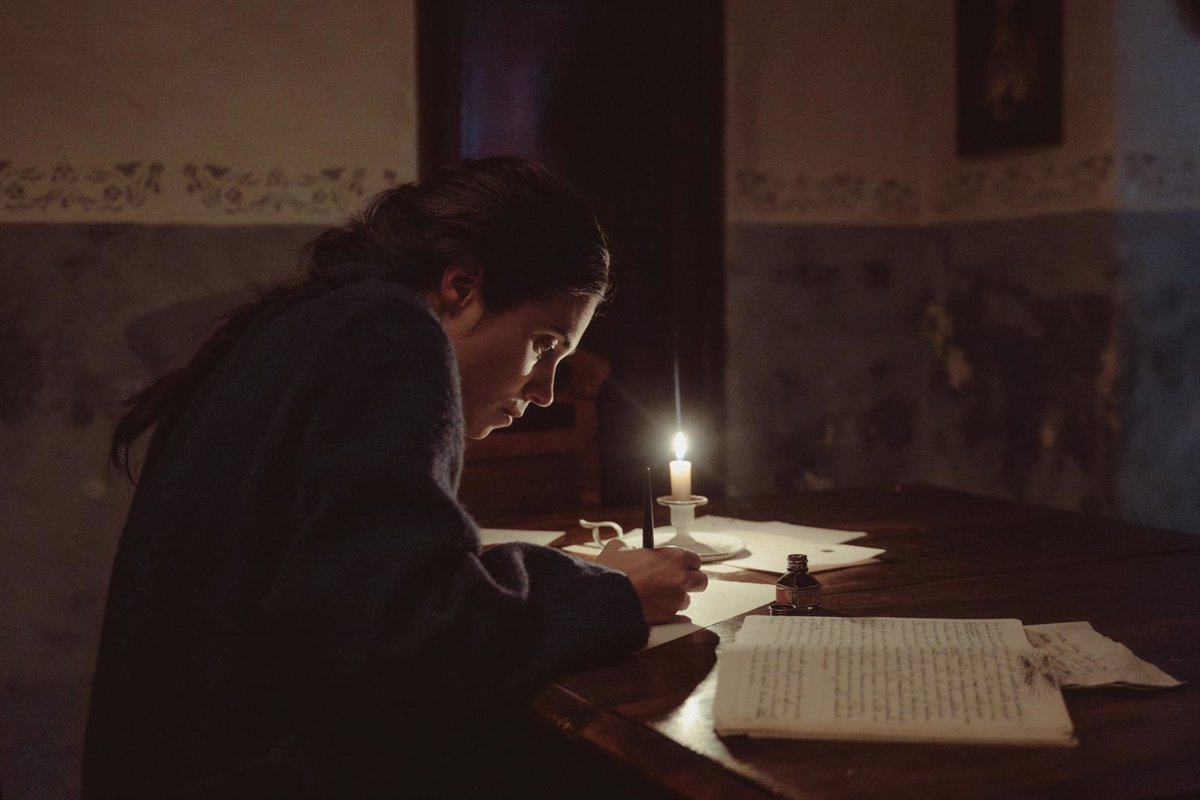
The filmmaker Celia Rico narrates in «minúsculas» the Spanish post-war period in the film ‘La buena letra’ –an adaptation of Rafael Chirbes’ homonymous book– where the focus is on a woman named Ana (Loreto Mauleón), who reveals «the feelings of the time through small gestures.»
«It is necessary to remember and understand the things that have happened. And thus, to know how we have shaped ourselves as a people, as a society, and as a country. To understand the history of Spain, Chirbes is a good window to look through to understand recent history,» the director stated in an interview with Europa Press, on the occasion of the premiere in theaters on April 30th.
Celia Rico argues that it is the «best» time to bring a film from the 1940s in Spain to the screen due to the current global conflict. «Seeing what is happening in the world, I think it is the best time to look back and reflect on the consequences of a war, the senselessness they have, and the open wounds they leave behind,» she explained.
The filmmaker highlights the importance of the film showing the grandmothers or great-grandmothers who remained silent, in a time when «the great deeds were valued more than the small gestures.» «I wonder how they managed to endure all that pain and keep quiet. They have not been focused on as much because it was thought that the great deeds were more important than the small gestures that also contribute to a country,» she commented.
In this sense, she notes that she hasn’t found «references» in cinema about these women –something she has found in literature– and attributes it to the fact that «there haven’t been as many women directing as there have been women writers.» «Literature has focused more on female characters of this era than cinema,» she emphasizes.
In the film, the character of Ana is linked to silence, a quality that, according to Celia Rico, has been «inherited» among women, and she laments that it is still difficult to speak up because «it would be breaking an almost ancestral silence.»
«The space of words and writing has been occupied by men and is a privileged space. That silence or invisibility of what happened to these women, I think we have inherited it. In fact, when women of my generation find it difficult or have found it difficult to speak up or say what we think, I believe it is because we are breaking an almost ancestral silence,» she indicated.
‘La buena letra’ is a drama set in a Valencian town during the post-war period, where Ana –who devotes herself to keeping quiet, cooking, and sewing– tries to move forward with her family, although the Spanish Civil War has left a wound in all of them, especially in her brother-in-law Antonio, played by Enric Auquer.
THE «INGENIO» FEMININE IN TIMES OF HUNGER
One of the challenges Celia Rico faced was portraying the early years of hunger. A period where, as she points out, «there is not much documentation on what was eaten» and she also didn’t have much information on the domestic tasks that women carried out. «The universe of women is less recorded, written, and testified,» she emphasizes.
However, thanks to the book ‘Las recetas de la posguerra,’ she was able to learn about the «ingenios» that women used to feed their families. For example, in the film, we see Ana making a potato omelet without eggs or potatoes, but with the orange peel.
«I thought it was beautiful that this was in the film. I don’t think I had seen these ingenious recipes in cinema before. And I thought it explained very well what hunger is. It also explained very well the epic of these women who managed as best as they could,» she concluded.