
Currently, according to data from the Vaccine Advisory Committee of the Spanish Pediatric Association, vaccination is «very effective,» but complete vaccination coverage is needed, that is, both doses, to achieve over 95% protection and prevent virus transmission.
The first dose is administered at 12 months, and the second at 3-4 years old. This scientific committee has recommended advancing the measles vaccine to two years to achieve protection as soon as possible.
And why is it important for younger children to be vaccinated against measles? The AEP cites several health reasons:
·One in every 3,000 infected individuals can die, and one in every thousand suffers from encephalitis, «which can be severe and leave neurological sequelae.»
·Moreover, in one out of every 100,000 cases, subacute sclerosing panencephalitis can develop, a progressive and fatal neurological disease.
·Meanwhile, it points out that other more frequent complications include otitis, pneumonia, severe keratoconjunctivitis, and diarrhea; «the latter two complications, especially in countries with low human development index (HDI),» it adds.
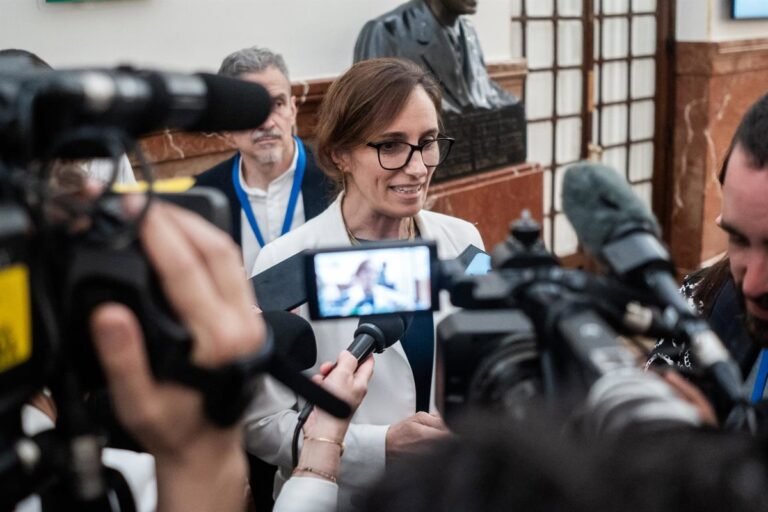
This is why the Ministry of Health led by Mónica García has recently updated its risk assessment for Spain, which is low for vaccinated Spaniards, although «the risk of virus exposure and infection for susceptible individuals is high.»
MEASLES, A HIGHLY CONTAGIOUS DISEASE
In this regard, we first interviewed pediatrician Valentí Pineda at Europa Press Salud Infosalus, a member of the Vaccine Advisory Committee of the AEP, who recalls that measles is the first infection to appear when vaccination coverage decreases.
«In our country, vaccination coverage is high,» although there are some autonomous communities where the second dose of the vaccine does not reach 95%. These two doses are necessary because as measles is a highly transmissible disease, the most transmissible, when vaccination coverage decreases, cases appear, especially in unvaccinated individuals,» emphasizes this expert.
However, this specialist highlights that it is «virtually impossible» for a vaccinated person to have measles if they have received both doses of the vaccine. «Health authorities say that there are two countries very close to us, Morocco and Romania, with very significant measles outbreaks, and this is probably due to a decrease in vaccination,» he points out.
A FATAL CONSEQUENCE
From the Spanish Society of Pediatric Neurology (SENEP), the outgoing president, neuropediatrician Rocío Sánchez-Carpintero, encourages vaccination against measles because it can lead to subacute sclerosing panencephalitis.
«This is a disease that occurs 7 to 10 years after having measles, in children and adolescents, and it causes progressive neurological deterioration, ending in a coma, disconnection from the environment, and the death of the person who has suffered it,» explains this expert.
There are some cases where this happens because the measles virus, even after causing a mild illness, mutates and remains in the cells of the nervous system, causing this degenerative disease.
MEASLES VACCINE HAS NO LINK TO AUTISM
On the other hand, Dr. Valentí Pineda laments the widespread idea that the measles vaccine specifically causes autism, «a somewhat tiresome issue because it is clear that there is no connection, and it has been scientifically proven that this is not the case.»
As he emphasizes, two doses of the vaccine are necessary because the first dose achieves close to 93% efficacy, while the second dose approaches 100%. Furthermore, the pediatrician from the Vaccine Advisory Committee of the AEP maintains that changes in the epidemiology of these infections recommend advancing the second measles vaccine dose to 2 years old, instead of the current 3-4 years, to ensure early protection, given the increase in the number of cases in Spain.
This scientific committee explained in a press release that there are several reasons why the virus may continue to circulate in the short term, such as spreading among infants under 12 months who are not yet vaccinated, or among children who do not have the complete protection provided by the two doses, with the second dose currently received between 3-4 years of age.
«Cases may also appear in adults born before 1981, the year when the second dose began to be systematically administered, which reaffirms the current need to emphasize childhood vaccination against this disease,» the institution emphasizes.
. Exclude references to unrelated pages like privacy policies or cookie policies. Focus solely on the content provided, without adding or inventing new information. Be thorough and ensure the rewritten version is at least 500 words long. Keep headings, keywords, and all structural elements intact to preserve SEO integrity, as well as gramatical issues. Keep the exact anchor texts of the links on 
Currently, according to data from the Vaccine Advisory Committee of the Spanish Pediatric Association, vaccination is «very effective,» but complete vaccination coverage is needed, that is, both doses, to achieve over 95% protection and prevent virus transmission.
The first dose is administered at 12 months, and the second at 3-4 years old. This scientific committee has recommended advancing the measles vaccine to two years to achieve protection as soon as possible.
And why is it important for younger children to be vaccinated against measles? The AEP cites several health reasons:
·One in every 3,000 infected individuals can die, and one in every thousand suffers from encephalitis, «which can be severe and leave neurological sequelae.»
·Moreover, in one out of every 100,000 cases, subacute sclerosing panencephalitis can develop, a progressive and fatal neurological disease.
·Meanwhile, it points out that other more frequent complications include otitis, pneumonia, severe keratoconjunctivitis, and diarrhea; «the latter two complications, especially in countries with low human development index (HDI),» it adds.
This is why the Ministry of Health led by Mónica García has recently updated its risk assessment for Spain, which is low for vaccinated Spaniards, although «the risk of virus exposure and infection for susceptible individuals is high.»
MEASLES, A HIGHLY CONTAGIOUS DISEASE
In this regard, we first interviewed pediatrician Valentí Pineda at Europa Press Salud Infosalus, a member of the Vaccine Advisory Committee of the AEP, who recalls that measles is the first infection to appear when vaccination coverage decreases.
«In our country, vaccination coverage is high,» although there are some autonomous communities where the second dose of the vaccine does not reach 95%. These two doses are necessary because as measles is a highly transmissible disease, the most transmissible, when vaccination coverage decreases, cases appear, especially in unvaccinated individuals,» emphasizes this expert.
However, this specialist highlights that it is «virtually impossible» for a vaccinated person to have measles if they have received both doses of the vaccine. «Health authorities say that there are two countries very close to us, Morocco and Romania, with very significant measles outbreaks, and this is probably due to a decrease in vaccination,» he points out.
A FATAL CONSEQUENCE
From the Spanish Society of Pediatric Neurology (SENEP), the outgoing president, neuropediatrician Rocío Sánchez-Carpintero, encourages vaccination against measles because it can lead to subacute sclerosing panencephalitis.
«This is a disease that occurs 7 to 10 years after having measles, in children and adolescents, and it causes progressive neurological deterioration, ending in a coma, disconnection from the environment, and the death of the person who has suffered it,» explains this expert.
There are some cases where this happens because the measles virus, even after causing a mild illness, mutates and remains in the cells of the nervous system, causing this degenerative disease.
MEASLES VACCINE HAS NO LINK TO AUTISM
On the other hand, Dr. Valentí Pineda laments the widespread idea that the measles vaccine specifically causes autism, «a somewhat tiresome issue because it is clear that there is no connection, and it has been scientifically proven that this is not the case.»
As he emphasizes, two doses of the vaccine are necessary because the first dose achieves close to 93% efficacy, while the second dose approaches 100%. Furthermore, the pediatrician from the Vaccine Advisory Committee of the AEP maintains that changes in the epidemiology of these infections recommend advancing the second measles vaccine dose to 2 years old, instead of the current 3-4 years, to ensure early protection, given the increase in the number of cases in Spain.
This scientific committee explained in a press release that there are several reasons why the virus may continue to circulate in the short term, such as spreading among infants under 12 months who are not yet vaccinated, or among children who do not have the complete protection provided by the two doses, with the second dose currently received between 3-4 years of age.
«Cases may also appear in adults born before 1981, the year when the second dose began to be systematically administered, which reaffirms the current need to emphasize childhood vaccination against this disease,» the institution emphasizes.
.
FUENTE