– Maribel Verdú and Mariela Garriga star in the series set in Morón de la Frontera premiering this Friday on Max
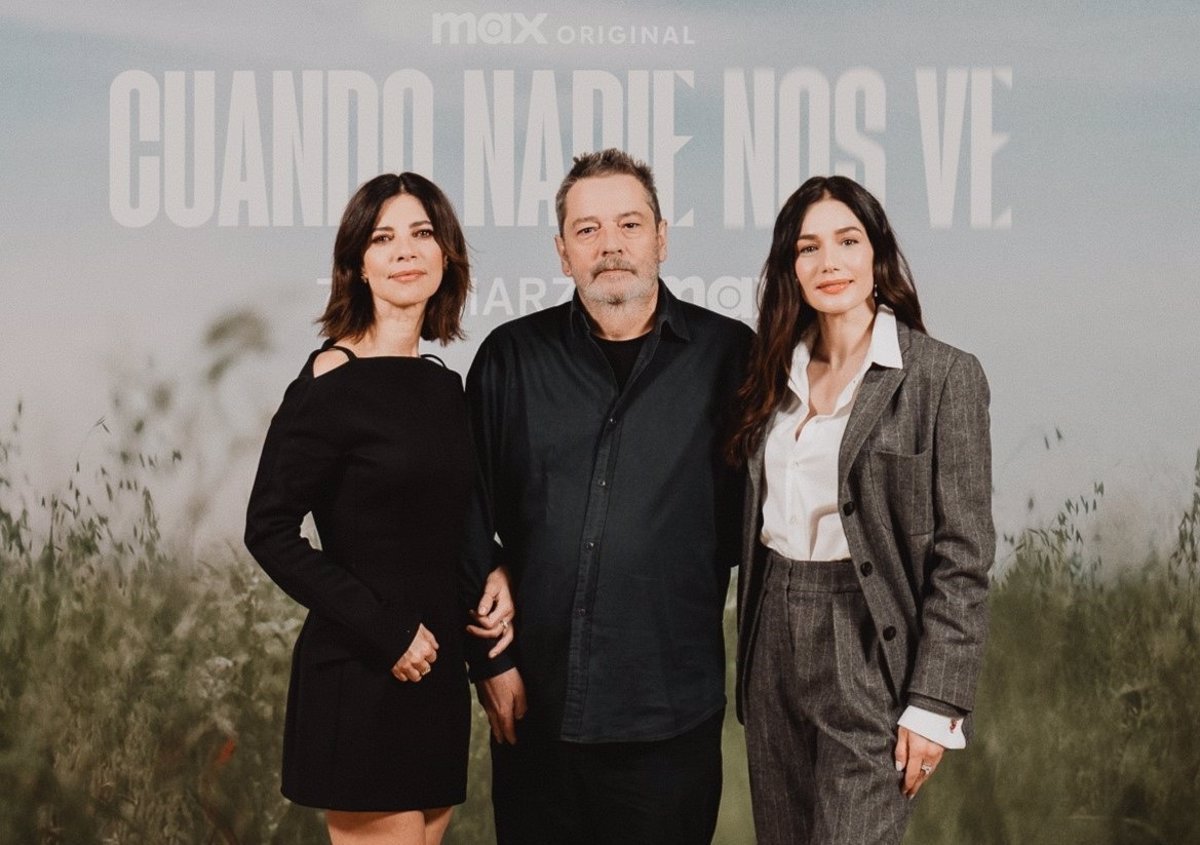
This Friday, March 7th, Max will debut ‘Cuando nadie nos ve’, the new series by Enrique Urbizu. Maribel Verdú and Mariela Garriga star in a tense eight-episode thriller set during Holy Week in Morón de la Frontera, mixing «religious fervor» with a criminal investigation by the Civil Guard involving also US military personnel stationed at the base in the Seville town.
Based on the novel by Sergio Sarria, ‘Cuando nadie nos ve’ tells the story of how the «everyday life, almost naturalistic» of a village in «deep Andalusia» and its customs and rituals during the intense days of Holy Week are disrupted by several deaths and disappearances linked to the American «bubble» that is the Morón air base, operational since the 1940s.
Tasked with unraveling the mysteries surrounding these crimes, which even have «supernatural undertones«, are Sergeant Gutiérrez, the head officer of the Civil Guard in the Andalusian town played by Maribel Verdú, and Lieutenant Castillo, the intelligence agent from the US investigating the disappearance of a cybersecurity expert played by Mariela Garriga. Two strong, dry, and extremely competent women who provide a contrast between the Civil Guard and the «US military intelligence.»
«I had never worked with the Civil Guard in any of my fictions and I really wanted to. I also find it a very, very attractive group to work on and with,» Urbizu said in an interview with Europa Press, where the veteran director also confessed that this series finally gave him the opportunity to direct Maribel Verdú, as they had been trying to work together for a long time.
«We had been looking for each other all these years. She didn’t hesitate to tell me… and as soon as I read the script, in the first phase of the project, I think in the first meeting I said that Maribel was going to be the lead,» recalled the director of ‘No habrá paz para los malvados’ or ‘La caja 507’. «We really wanted to, a lot. Well, I didn’t know he wanted it as much as I did… but I did know what my desires were. I would have said yes without reading the script,» said Verdu, who is also portraying a Civil Guard agent for the first time.
«I had already played a National Police officer, but it’s completely different. This is militarized, it’s something else… they operate differently. And it has been fascinating,» said the actress, who still remembers the first time she was on set dressed in the Civil Guard uniform with the tricorn hat. «It’s a shame I couldn’t do the whole series like that, because it puts you in a different situation than when you’re already in your pants, your boots… That’s why I always carried the ‘gun’ behind, because it also puts you in another place, it stretches you,» she explained.
TWO STRONG AND SUCCESSFUL WOMEN IN MALE-DOMINATED WORLDS
Both Verdú and Garriga describe their characters as two very «strong» and extremely «disciplined» women. Two strict, upright, and even sharp investigators who initially appear distant, with a sort of shield or shell. Unfortunately, it is almost essential for women to have this demeanor when pursuing careers in environments like the military or law enforcement, which until recently were almost exclusively male-dominated and where «if not, they’ll eat you alive.»
«They are like that, really. We had our counterparts, so to speak, who were with us throughout the series to tell us how to enter a house and how you really have to use that imperative tone, the issue of the weapon, the way you walk… They live in a male-dominated world where they have always been denigrated, and now these women, many of them young, have at least two or three degrees. That is to say, they are undeniable,» Verdú stated.
«And I don’t think it’s something you decide: ‘Now I’m going to be the tough woman’. It’s a consequence. Life has made them that way, it’s a consequence of the environment they studied and worked in that leads them to be like this,» argued Garriga, who as a foreigner admits she was completely impressed by the fervor and «passion» of the Holy Week rituals in Morón.
The Cuban-born actress, now residing in the United States, recalls the «emotion» she felt witnessing some scenes where the residents of Morón de la Frontera recreated the processions. «And to see the passion they have for doing that and how everyone comes together to do it. I mean, it’s not just one family doing it and the others not. No, the whole town gets involved,» the actress from the ‘Mission: Impossible’ franchise remembered.
«AS LONG AS THEY DON’T CONFUSE IT WITH THE KU KLUX KLAN…»
«One thing I discovered is that it has nothing to do with religion. Forget about religion. It’s something else. I’m not religious and it’s really such a strong feeling that you experience. I was filming with sunglasses… and thank goodness because I was crying,» admitted Verdú, who is unsure if viewers in Berlin, Oslo, or Connecticut watching the Max series will be able to understand that «religious fervor.»
«I don’t know, because for us, that Latin passion and that thing, suddenly… some people are going to be a bit taken aback,» said Verdu. Garriga is more optimistic in this regard, believing that they will «learn a lot» and that film and television are ideal vehicles to learn about other cultures and customs. «Vivo en Estados Unidos, también soy americana, y tengo muchas amistades que prefieren ver series y películas extranjeras a las americanas porque quieren aprender sobre el mundo exterior», dice.
«Creeo que la serie será bien recibida porque lo más cercano y común suele ser lo más universal y se puede entender en todas partes lo que les sucede a los personajes. Y en Connecticut, siempre y cuando no se confundan con el Ku Klux Klan…», ironiza Urbizu. Maribel Verdú y Mariela Garriga protagonizan la serie ambientada en Morón de la Frontera que se estrena este viernes en Max
Este viernes 7 de marzo llega a Max ‘Cuando nadie nos ve’, la nueva serie de Enrique Urbizu. Maribél Verdú y Mariela Garriga protagonizan un tenso thriller de ocho capítulos ambientado en la Semana Santa de Morón de la Frontera que mezcla la «pasión cofrade» con una investigación criminal de la Guardia Civil en la que también están implicados militares de la base estadounidense ubicada en la localidad sevillana.
Basada en la novela de Sergio Sarria, ‘Cuando nadie nos ve’ relata cómo «la vida cotidiana, casi naturalista» de un pueblo de «la Andalucía profunda» y sus costumbres y ritos propios de unos días de exaltación y máximo fervor como son los de la Semana Santa, se ve alterada por varias muertes y desapariciones que están también relacionadas con la «burbuja» estadounidense que supone la base aérea de Morón, operativa desde los años 40.
Las encargadas de desentrañar los misterios que rodean estos crímenes, que llegan incluso a tener «aromas sobrenaturales», son la sargento Gutiérrez, la oficial al mando de la Guardia Civil en la localidad andaluza interpretada por Maribél Verdú, y la teniente Castillo, la agente de inteligencia llegada de Estados Unidos para investigar la desaparición de un militar experto en ciberseguridad interpretada por Mariela Garriga. Dos mujeres rectas, secas y extremadamente competentes que darán lugar a otro contraste: el la Benemérita con la «inteligencia militar estadounidense».
«Yo nunca había trabajado con la Guardia Civil en ninguna de mis ficciones y me apetecía mucho. Me parece además un colectivo muy, muy atractivo para trabajar sobre y con él», asegura Urbizu en una entrevista concedida a Europa Press en la que el veterano director también confiesa que esta serie también le ha dado la oportunidad de, al fin, poder dirigir a Maribel Verdú, ya que ambos llevaban mucho tiempo intentando trabajar juntos.
«Nos hemos andado buscando todos estos años. Ella no ha escatimado en decírmelo… y yo, en cuanto leí el guión, en la primera fase del proyecto, creo que en la primera reunión dije que la protagonista iba a ser Maribel», recuerda el director de ‘No habrá paz para los malvados’ o ‘La caja 507’. «Teníamos muchas ganas, muchas ganas. Bueno, yo no sabía que él tenía las mismas ganas que yo… pero yo sí sabía cuáles eran mis ganas. Hubiera dicho que sí sin leer el guión», asegura Verduó que también es la primera vez que da vida a una agente de la Guardia Civil.
«Ya había hecho de Policía Nacional, pero nada que ver. Esto es militarizado, es otra cosa… van por otro lado. Y ha sido apasionante», dice la actriz que aún recuerda la primera vez que en el rodaje se vio vestida con el uniforme de la Benemérita y el tricornio. «Es una pena no haber podido hacer toda la serie así, porque te coloca en una situación diferente a cuando ya vas con tu pantalón, tus botas… Por eso yo siempre llevaba la ‘pipa’ detrás, porque eso también te coloca en otro lugar, te estira», explica.
DOS MUJERES FUERTES Y EXITOSAS EN MUNDOS DE HOMBRES
Tanto Verdú como Garriga coinciden en definir a sus personajes como dos mujeres «muy fuertes» y extremadamente «disciplinadas». Dos investigadoras estrictas, rectas e incluso cortantes que se presentan desde un primer momento distantes, con una especie de coraza o un caparazón. Algo necesario, lamentablemente casi imprescindible, para las mujeres a la hora de hacer carrera en entornos como el de ejercito o el de las fuerzas de seguridad, que hasta hace bien poco eran ámbitos casi exclusivamente masculinos y en los que «si no, te comen».
«Son así, de verdad. Teníamos a nuestras homólogas, digamos, que estuvieron con nosotras toda la serie para decirnos cómo entras en una casa y cómo tienes realmente que poner ese tono imperativo, el tema del arma, la manera de andar… Es que viven en un mundo de hombres donde ellas han sido siempre denostadas y ahora mismo estas mujeres, que son muchas jóvenes, tienen mínimo dos o tres carreras. Es decir, son incontestables», sentencia Verdú.
«Y creo que no es una cosa que piensas: ‘Ahora voy a ser la mujer dura’. Es una consecuencia. Garriga argues that «Así les ha hecho la vida, es consecuencia del ambiente en donde han estudiado y donde han trabajado que les lleva a ser así» is a result of the environment in which they have studied and worked. As a foreigner, she confesses that she was completely impressed by the fervor and «passion» of the Holy Week rituals in Morón.
The Cuban-born actress, who resides in the United States, recalls the «emotion» she felt while witnessing scenes in which the residents of Morón de la Frontera recreated the processions. «And to see the passion they have for doing that and how they all come together to do it. I mean, it’s not just one family doing it and others not. No, the whole town gets involved,» recalls the actress from the ‘Mission Impossible’ saga.
«I discovered that it has nothing to do with religion. Forget about religion. It’s something else. I’m not religious and yet it’s such a beastly feeling that you experience. I was filming with sunglasses on… and thank goodness because I was crying,» admits Verdú, who is unsure if viewers in Berlin, Oslo, or Connecticut watching Max’s series will be able to understand that «brotherhood fervor.»
«I don’t know, because that Latin passion and that thing, that suddenly… some people are going to be a bit shocked,» says Verdú. Garriga is more optimistic in this regard, believing that they will «learn a lot» and that film and television are ideal vehicles to approach other cultures and customs. «I live in the United States, I’m also American, and I have many friends who watch more foreign series and movies than American ones because they want to learn about the outside world,» she says.
«I think the series will travel well because precisely what is closest, what is simplest, is usually the most universal and is understood everywhere what happens to the characters and so on. And in Connecticut, as long as they don’t confuse it with the Ku Klux Klan…» Urbizu jokes.
FUENTE