It presents a supervisory report with an updated cost, taking into account the merger between Bankia and CaixaBank
The Court of Auditors will present its latest report to the Congress and the Senate next Thursday, indicating that the cost of public resources used in the banking restructuring process, as of January 1, 2022, amounted to 71,833 million euros, an increase of 5,256 million euros compared to the previous calculation by the institution.
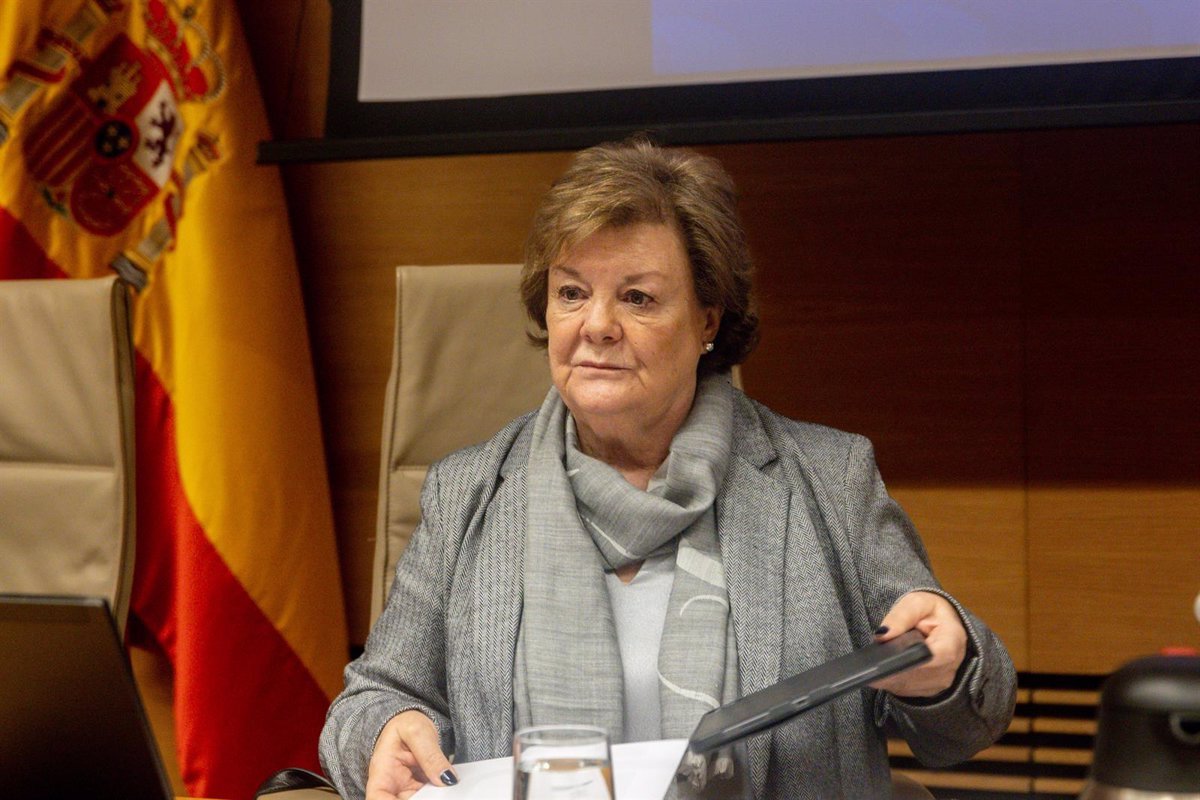
This is the supervisory report on the actions of the Bank Restructuring Fund (FROB) and the Bank of Spain in the merger between CaixaBank and Bankia and the status of the banking restructuring process as of December 31, 2021, which the Court’s president, Enriqueta Chicano, will present to the Joint Committee for Relations with the Court of Auditors.
Although the supervisory body had been updating the bailout figure, this document took into account the impact of the merger between Bankia and CaixaBank in November 2021. Previously, Bankia was the only restructured credit institution still owned by the FROB.
Through the merger of the two entities, the FROB replaced the value of its indirect 62% stake in Bankia on its balance sheet with another indirect stake in CaixaBank of 16.1%. All this was done by the FROB through BFA, an entity that it owns 100% and that includes seven Spanish savings banks, including Caja Madrid and Bancaja.
The cost of 71,833 million euros was obtained by starting from the amounts of committed resources and deducting items that represent income, lower costs, unavailable or canceled resources, and capital or credits that the FROB still held as of December 31, 2021.
IT WARNED THAT THE COST COULD CONTINUE TO RISE
The Court of Auditors warned, however, that the estimate of the cost of the restructuring process «cannot be considered definitive» because there are certain operations after 2021 that could cause an increase or decrease in the 71,833 million euros.
Thus, of the cost of public resources used in the banking restructuring process, 50,622 million euros corresponded to the FROB and another 21,273 million euros from credit institutions. At the same time, there was a negative impact of 62 million euros attributable to the Bank of Spain.
The main component of the cost, as explained by the Court of Auditors, was derived from contributions to capital and participating shares, totaling 52,716 million euros, representing 73% of the cost. The processes that incurred the highest cost were BFA/Bankia, with 17,590 million euros; Banco CAM, with 12,560 million euros; and NCG, with 9,229 million euros.
In its report, the Court of Auditors pointed out that both the FROB and the Deposit Guarantee Fund of Credit Institutions and the Bank of Spain had «adequately» complied with the applicable regulations in the actions taken in the banking restructuring processes.
The institution also considered that the monitoring and control actions of the restructuring processes carried out by the entities had been, in general, «adequate.»
RECOVERY OF 40 MILLION EUROS FOR THE FROB IN LAWSUITS
Throughout the audited period, the FROB and the Guarantee Fund had undertaken or appeared in a series of legal actions aimed at recovering resources that may have been improperly extracted from credit institutions.
By the end of 2021, the FROB had recovered a total of 40 million euros from income derived from judgments and costs. Meanwhile, the Guarantee Fund received 14 million euros (including costs) from one of the two proceedings initiated by the FROB against executives of financial institutions.
The report also noted that the FROB adequately monitors the management of the Asset Management Company for Restructuring (Sareb), known as the ‘bad bank.’
The Court added that the monitoring and control actions of the managed entities had been appropriate, although it warned that the monitoring and control of the divestment in BFA/CaixaBank presented «an opportunity for improvement.»
Indeed, none of the Council of Ministers’ agreements extending the divestment deadline, currently set for December 2025, had taken into account the actions necessary for the divestment of the stake that the FROB holds in BFA, which will have to take place, the Court of Auditors pointed out, through a likely liquidation process of this company.
The supervisory report indicated that the FROB currently does not have a strategic document that, comprehensively, includes planning, a temporal schedule, and a methodology for all the actions necessary to carry out the divestment activity in BFA.
Therefore, the Court of Auditors believed that in order to «reduce uncertainty and facilitate planning,» the FROB could incorporate into the divestment strategy the analysis of different alternative scenarios for the execution of the sale of the stake in CaixaBank, calculating the recoverable amount taking into account variables such as the share price and the timing of the divestment.
BANK OF SPAIN AND THE FROB COMPLIED DURING THE MERGER OF CAIXABANK
On the other hand, the Court of Auditors pointed out that both the Bank of Spain and the FROB had «adequately» complied with the regulations in the exercise of their respective competencies regarding the merger of Bankia with CaixaBank, completed in March 2021, and the merger operation had been carried out in all its phases in accordance with the applicable regulations.
Finally, the report noted that the recommendation made by the Court of Auditors in its previous report to the FROB, to establish a management system for BFA that facilitates the verification of the conditions established in the agreements formalized between BFA and Bankia for the distribution of costs related to legal contingencies arising from the commercialization of hybrids and the public offering of Bankia shares, can be considered fulfilled.