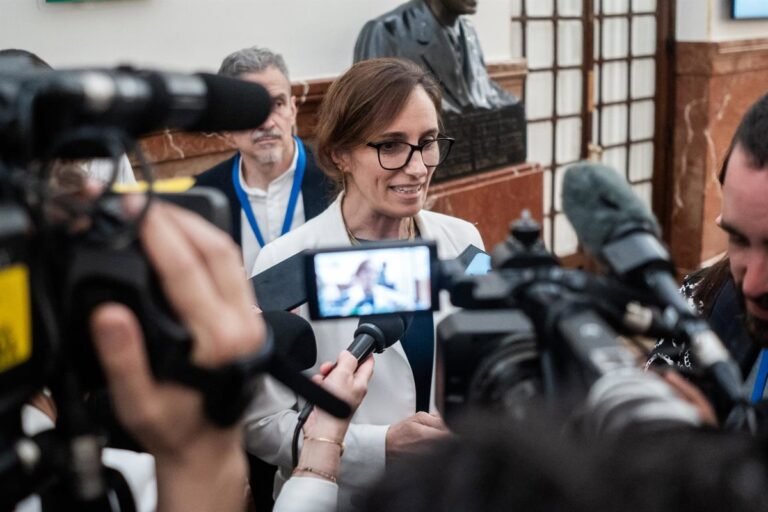

En this terms has responded during the Council of Employment, Social Policy, Health and Consumer Affairs (EPSCO), held in Luxembourg, in response to the letter sent by these countries last March to request urgent actions against the growing use of emerging nicotine products (vaporizers, heated tobacco), their cross-border online sale, and their promotion on social networks.
Thus, in its response, it has stated that «this comprehensive evaluation» that they intend to carry out «aims to address concerns regarding young people’s access to new tobacco and nicotine products,» and has concluded, «will determine the subsequent stages regarding the legal framework.»
Thanking the joint letter, it has emphasized the importance of working to protect young people from the harm caused by these new products. «In this case, I would like to make it very clear the following: we share your concerns, there is no doubt. We agree with your concerns.»
In its intervention, it has recalled that nicotine exposure in Europe is increasing, especially among adolescents, due to new products such as nicotine pouches and electronic cigarettes. And it has pointed out that, despite the European Commission banning heated tobacco products in 2023, other products such as nicotine pouches and flavors still depend on each Member State’s regulation.
«THE ABSENCE OF EUROPEAN MEASURES RAISES LEGISLATIVE DIVERGENCES»
Ireland, which was the first to support the motion, has emphasized that «it is important to act collectively to prevent the harm caused by tobacco and nicotine»; it has also advocated for regulations since 10 years have passed since the approval of the current directive, «and since then, the sector has evolved significantly.» Furthermore, it has noted that many countries have begun to examine specific measures, as is the case in Ireland, where the age for the sale of tobacco products is 21 years.
«The absence of European measures raises legislative divergences, making enforcement much more difficult, especially in the absence of a cross-border ban on the sale of products intended for young people,» it added, on behalf of the Member States that signed the letter, calling for the European directive to be revised «as soon as possible» to precisely include different forms of tobacco; new forms of advertising through social networks and influencers, and, of course, to increase the cross-border ban on the sale of these products.
Belgium has highlighted the «very rapid» evolution of nicotine products, especially vaping products, noting that they are addictive and urging Member States to impose restrictions on flavors. Slovenia has expressed concern that children may fall into addiction to these products, and Germany has called for new regulations to be implemented this year.
«The current European legislation on combating tobacco and nicotine should take into account these new products that are missing from the legislative text. For this reason, Germany supports the call to the European Commission to take action and present corresponding regulatory proposals this year,» their representative stated.
Furthermore, Latvia has supported a new strict regulatory approach to encourage cigarettes to move away from combustible tobacco and, at the same time, to provide guaranteed protection for young people and new tobacco users and consumers. According to these arguments, Romania and Latvia have supported the proposal of Ireland and the Netherlands, who were the ones responsible for the letter.