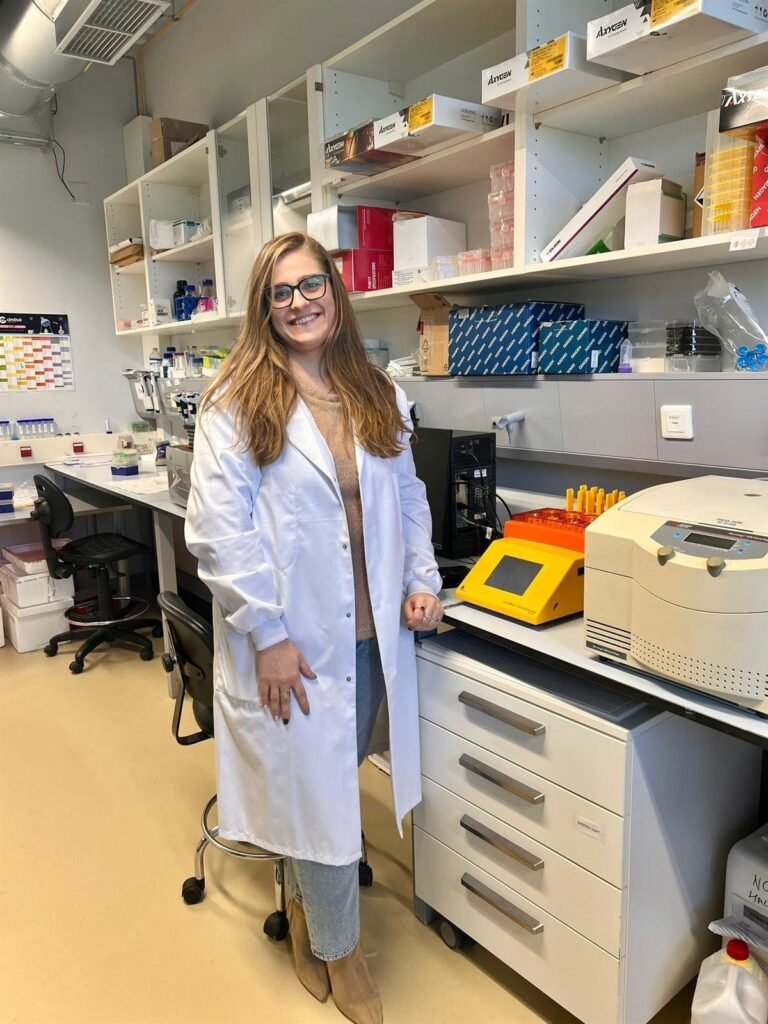

A routine blood test carried out in the first trimester of pregnancy can accurately identify women at risk of developing preeclampsia five months before symptoms appear, according to research conducted by iPremom and researchers from the Carlos Simón Foundation, presented on Monday at the 41st Annual Meeting of the European Society of Human Reproduction and Embryology (ESHRE).
Researchers analyzed fragments of RNA that circulate freely in the blood plasma (cfRNA) to study molecular signals during pregnancy. Between September 2021 and June 2024, 9,586 pregnant women from 14 Spanish hospitals participated in a clinical study, and their data were used to successfully predict the risk of preeclampsia weeks before any symptoms appeared, paving the way for early and personalized detection.
The cfRNA approach allows for capturing subtle molecular signals from multiple maternal tissues, including the uterus and placenta, months before symptoms appear. Blood samples were collected at various points during pregnancy (9-14 weeks, 18-28 weeks, and over 28 weeks or at the time of diagnosis). From these samples, researchers extracted cfRNA and analyzed 548 samples from 216 women using cfRNA sequencing technology.
Through artificial intelligence techniques, they were able to identify specific patterns that anticipated which women would develop preeclampsia before any clinical signs.
In the first trimester of pregnancy, this predictive model successfully anticipated cases of early-onset preeclampsia with outstanding accuracy: it correctly identified 83% of women who would develop the condition and correctly ruled out 90% of those who would not. On average, this prediction was made 18 weeks before clinical diagnosis. The overall reliability of the model was very high, scoring 0.88 out of 1 on the standard metric that evaluates this type of tests.
«For the first time, we have shown that a routine blood sample in the first trimester can provide an early alert for preeclampsia with high accuracy, long before symptoms appear,» said biomedical researcher Dr. Nerea Castillo Marco, the study’s lead author.
EARLY-ONSET PREECLAMPSIA INVOLVES MOLECULAR CHANGES
Late-onset preeclampsia was also predicted with an average of 15 weeks in advance, thanks to a different set of genetic signals in the blood, which barely overlapped with the former. Unlike early-onset cases, late-onset cases showed few signals related to the uterine lining, instead displaying changes linked to general processes throughout the body. These results confirm that early-onset and late-onset preeclampsia are two different conditions, both in their origin and development.
«Our transcriptomic analyses showed that early-onset preeclampsia involves widespread molecular changes in all organs, including the liver, kidney, placenta, brain, and lungs,» said Castillo.
Looking ahead, project leader Dr. Tamara Garrido states that, with ongoing efforts in clinical validation and obtaining regulatory approvals already underway, cfRNA-based screening could be available in clinical practice within the next year, «offering an unprecedented opportunity for early and non-invasive identification of pregnancies at risk of developing preeclampsia and enabling timely intervention.»