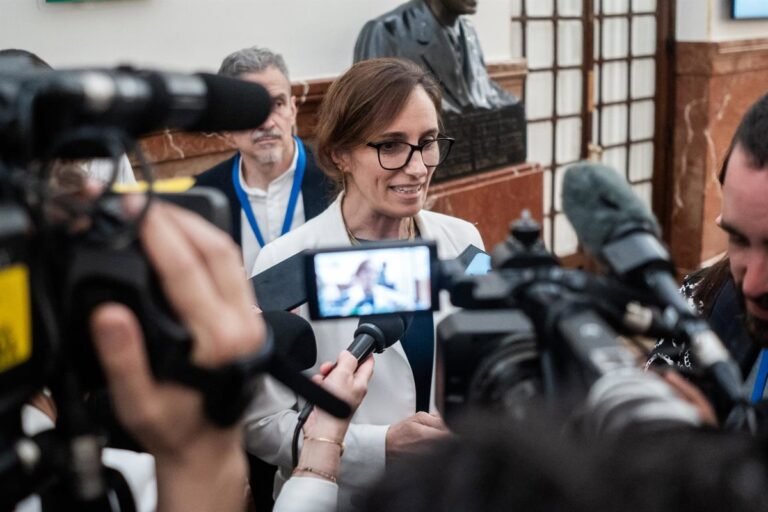
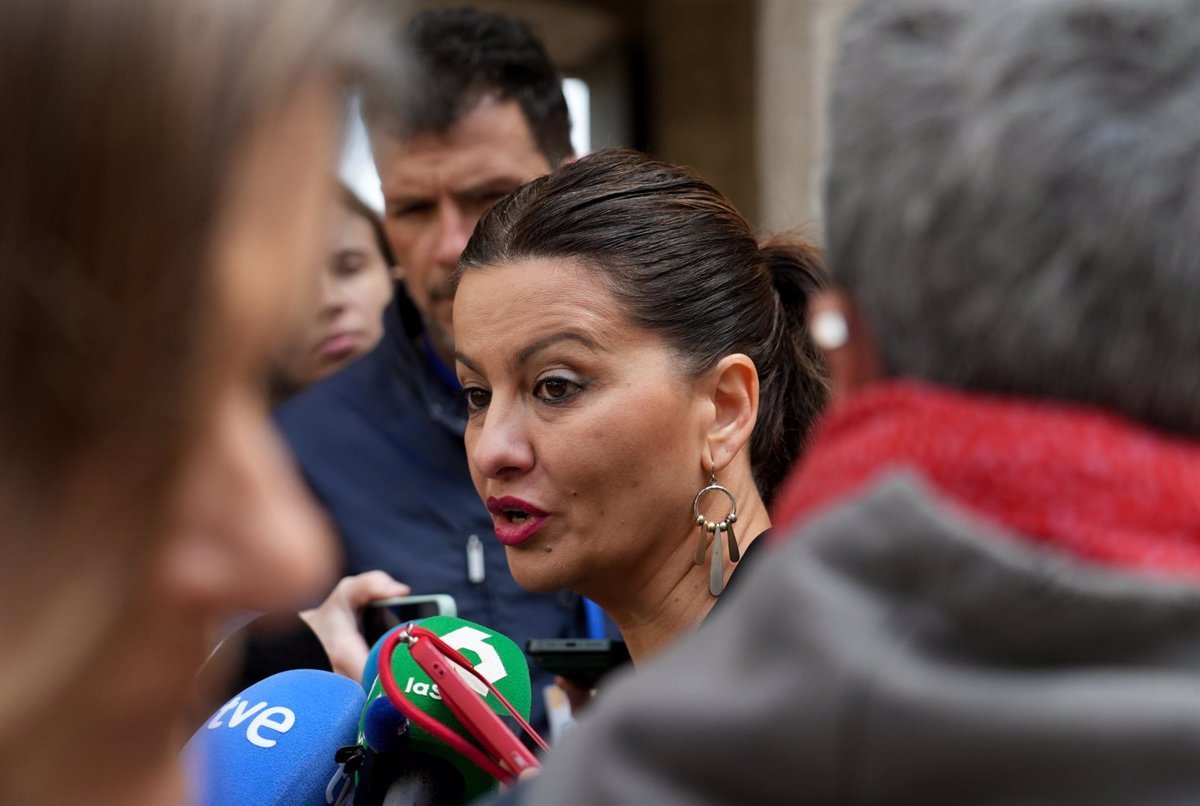
The Minister of Youth and Childhood, Sira Rego, has reached out to the autonomous communities to discuss the distribution of migrant minors and begin transfers this summer.
The minister emphasized that in this meeting they have the «opportunity» to reach an agreement because it is «a space for collaboration and dialogue» with the autonomous communities and pointed out that they have the opportunity to «propose any modifications they want to contribute.»
This was stated by the minister on Monday in statements to the media, before the extraordinary Sectorial Conference on Childhood and Adolescence to address the distribution of unaccompanied migrant minors, with the Community of Madrid and Aragon against the call.
«It is a Sectorial Conference in which we must and will convey the agreement that involves the reform of article 35, the solidarity response plan, and the criteria established by the Royal Decree for this binding and solidarity reception among all territories,» she explained.
Rego pointed out that the reform of this article of the Immigration Law contemplates «the possibility that the criteria may be modified by the autonomous communities»: «Today we are at that moment.»
Likewise, she stressed that they will continue to «extend the hand» to the autonomous communities to «continue the dialogue, continue working, and try to implement this modification and this project of binding and solidarity reception guaranteeing rights and involving all territories»-
Regarding the criticism from the Popular Party that the convening of this Sectorial Conference is illegal because it is extraordinary, Rego defended that the modification of the law «contemplates the need to convene this sectorial conference,» so they are complying with a mandate of the royal decree.
She also indicated that the regulations of the Sectorial Conference itself «contemplate the possibility of making extraordinary calls.»
«Logically, all of this is endorsed by the legal body of the Government. Therefore, we understand that it meets all the guarantees,» she asserted.
The Minister of Youth and Childhood highlighted that they have been working «for over a year on this issue» with the autonomous communities and have convened «several sectorial conferences.»
«We have encountered rejection from some of the communities of the Popular Party to a plan that has been very complex to develop, we have tried all possible avenues. We have the best of intentions. We are talking about fundamental rights, human rights, we are talking about children who are alone,» she emphasized.
For the minister, this is a «sensible» reform that the Government has been working on «for many months.» «There are territories governed by the Popular Party that endorse and have supported, in some way, the need for the reform of this article, we still have the hand extended,» she said.
Rego concluded that they have held this Sectorial Conference precisely because they have the will to continue working and dialogue with all the autonomous communities. «There has been no lack of information, what is needed is more political will,» she warned.