
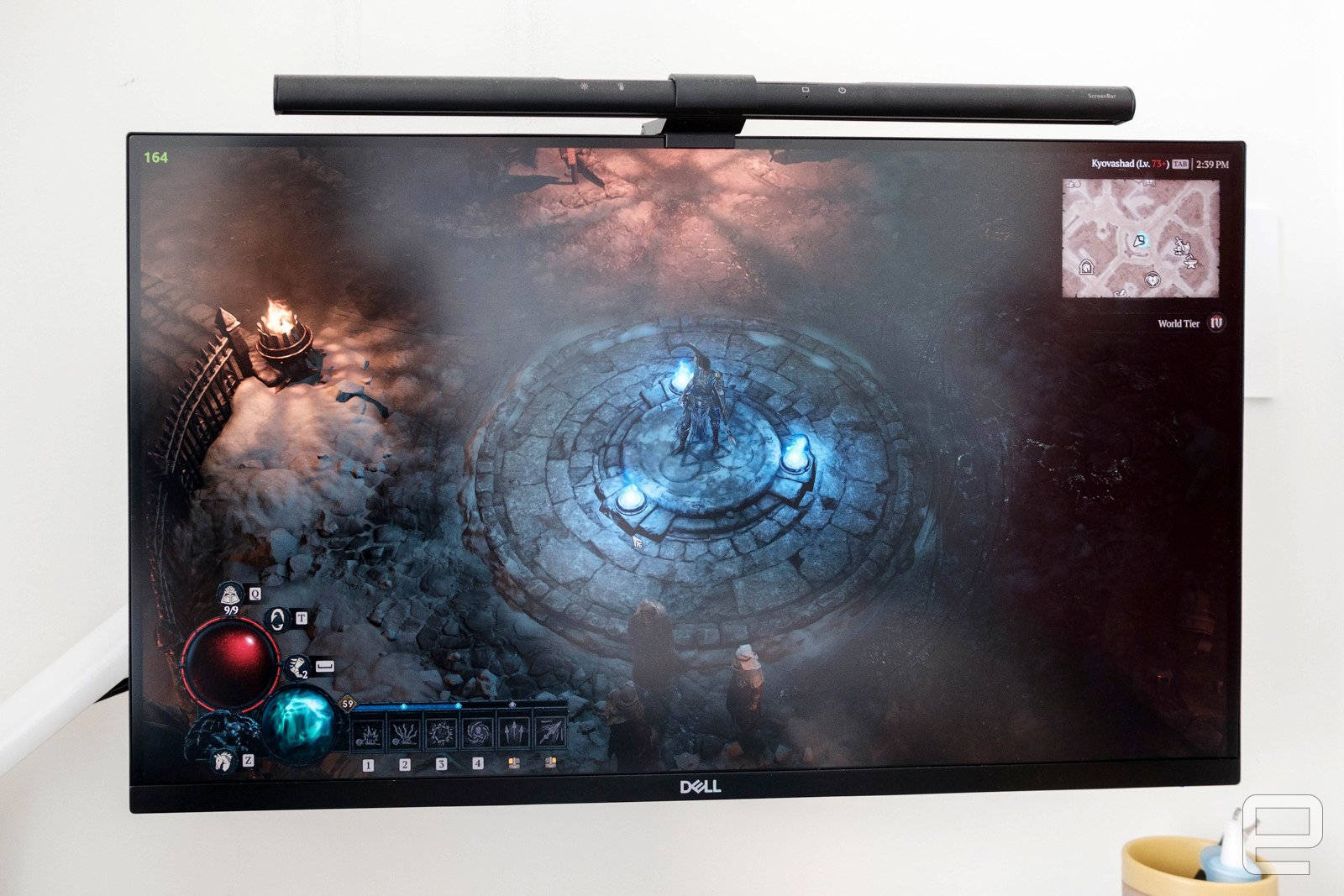
Let’s be honest: shopping for a gaming monitor can feel overwhelming. When you decide to buy a display for gaming, a whole new set of considerations comes into play. Questions about LCD vs OLED, NVIDIA G-Sync vs AMD FreeSync, and refresh rates can make the process confusing. This guide aims to answer those questions and help you find the perfect gaming monitor for your budget.
### Table of contents
– Best gaming monitors for 2025
– How we test gaming monitors
– Factors to consider before buying a gaming monitor
– Gaming monitor FAQs
### Best gaming monitors for 2025
### How we test gaming monitors
We have extensively tested gaming monitors, including models with WOLED and QD-OLED panels. Our research and testing process ensures that we provide accurate and reliable recommendations.
### Factors to consider before buying a gaming monitor
#### LCD vs OLED
When choosing a gaming monitor, you need to decide between an LCD or OLED panel. The choice often comes down to price, as OLED monitors are typically more expensive. Both panel types have their own advantages and disadvantages, so it’s essential to understand the differences before making a decision.
#### What about OLED?
OLED screens offer superior image quality, with the ability to produce true blacks and vibrant colors. They are especially great for HDR gaming. However, OLED monitors can be more expensive and may have issues like text fringing and burn-in.
#### Screen size, resolution, and aspect ratio
Consider the size, resolution, and aspect ratio of the monitor based on your preferences and gaming setup. Factors like pixel density, performance costs, and game compatibility should be taken into account when choosing the right size and resolution for your gaming needs.
#### Refresh rates and response times
Refresh rates and response times are crucial for a smooth gaming experience. Higher refresh rates offer smoother motion, but there are diminishing returns beyond a certain point. Response times also play a significant role in motion clarity, so it’s essential to choose a monitor with fast response times.
#### FreeSync vs G-Sync
Adaptive sync technologies like FreeSync and G-Sync help prevent screen tearing during gameplay. Both technologies offer similar performance, and most monitors now support both, ensuring tear-free gaming regardless of your GPU.
#### Inputs
Ensure that the monitor has the necessary inputs for your setup, such as DisplayPort and HDMI ports. Consider the compatibility with your gaming system, whether it’s a PC or console, to make the most of your gaming experience.
#### A word about HDR
While HDR performance on gaming monitors has improved, there is still room for growth. Look for monitors with better HDR capabilities, as they can enhance your gaming experience with improved brightness and color accuracy.
### Gaming monitor FAQs
#### Are curved monitors better for gaming?
Curved monitors offer a more immersive gaming experience, but personal preference plays a significant role. Some users may find edge distortion distracting, so it’s essential to consider your preference when choosing a curved monitor.
#### What aspect ratio should I look for in a gaming monitor?
Most gaming monitors feature a 16:9 aspect ratio, which is widely supported by games. However, ultrawide monitors with 21:9 or 32:9 aspect ratios offer a more expansive view, though game compatibility may vary.
#### Is OLED good for gaming?
OLED monitors are excellent for gaming, offering superior image quality and HDR performance. If you prioritize gaming and have the budget, an OLED monitor can provide an immersive gaming experience.
#### How much does a good gaming monitor cost?
While high-end gaming monitors can be expensive, there are budget and midrange options available that offer competitive features. Prices have become more competitive, making it easier to find a good gaming monitor within your budget.
This article originally appeared on Engadget at.
FUENTE