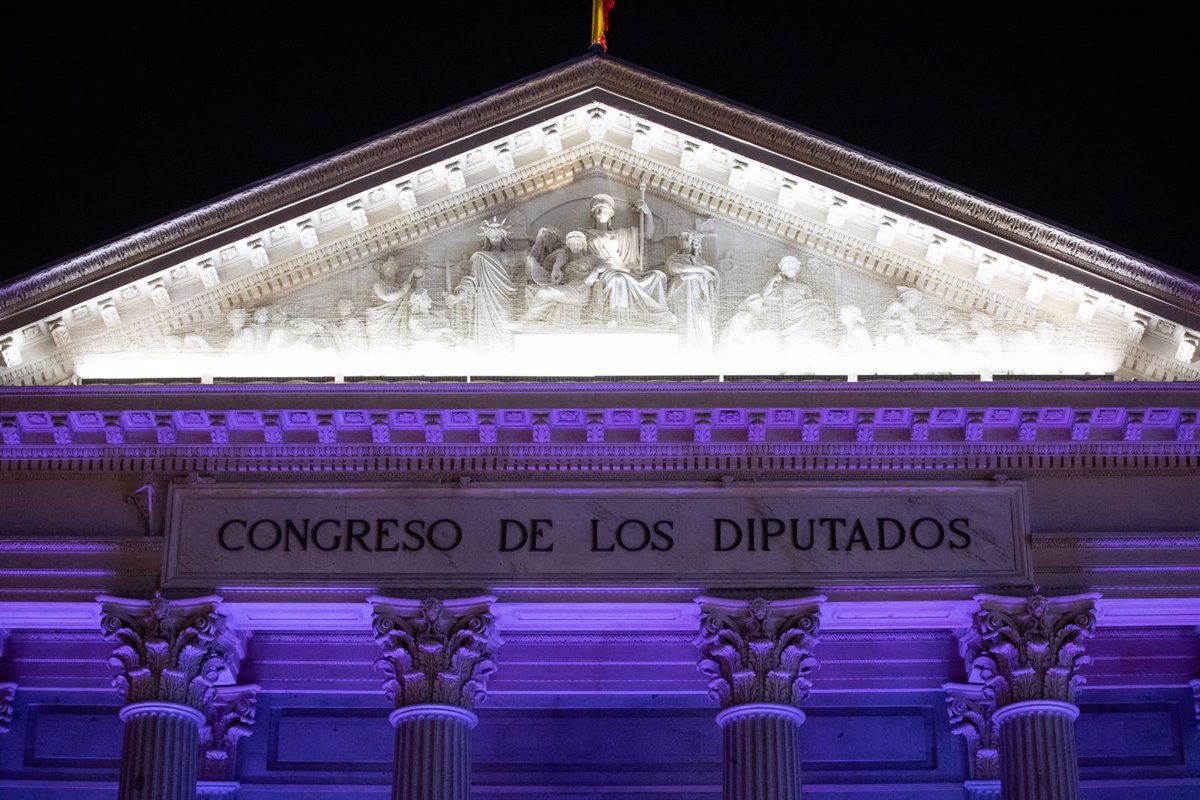
The new State Pact against Gender Violence, approved by the Congress of Deputies in February, incorporates measures for the first time aimed at women with addictions. Among them, it includes the need to guarantee the protection and access to resources for this group.
The agreement of all parliamentary groups, except Vox which voted against, expands the measures of the 2017 Pact from 290 to 462 and introduces new axes such as vicarious, economic, and digital violence. It has a 50% increase in economic allocation, reaching 1.5 billion for the next five years of validity.
In this sense, the Pact requests in one of its measures to guarantee effective access to information channels on sexual and reproductive health, «with special attention to vulnerable women, with disabilities, mental health problems or addictions, in situations of poverty or institutionalized, ensuring their comprehensive protection against any form of violence.»
It also advocates for an intersectional approach in any policy, measure, and institutional response adopted to combat violence against women in all its forms, taking into account the different vulnerabilities and circumstances of the victims. The objective is to guarantee the «full access and effective exercise» of their rights.
Furthermore, it requests the implementation or adaptation of specialized resources to the needs and conditions of these women, to make them «fully accessible and inclusive» for them (sign language, pictograms, easy reading, translation and interpretation, elimination of physical barriers, etc.).
Likewise, the State Pact calls for the adaptation of action protocols, procedures, and other prevention, detection, care, protection, and support measures to the diversity of women: women with physical and/or intellectual disabilities, migrants, transgender individuals, the elderly, young people, in rural areas, with addictions, with mental health problems, etc.
It also advocates for studies on the situation of women with special vulnerability, including women with addictions. It also mentions those in situations of poverty or social exclusion, homeless, in prison or other closed institutions, in prostitution contexts, with mental health problems, with disabilities, elderly, young people, in rural environments, migrants, as well as older women who suffer from gender-based violence. In this line, it urges to take into account the results of such research when creating or adapting specific resources.
On the other hand, the Network for Addiction Care (UNAD) has celebrated that the new State Pact against Gender Violence includes, for the first time, women with addictions. «This decision represents a fundamental advance in recognizing the multiple forms of violence suffered by these women and the need to guarantee their protection and access to resources,» it has pointed out.
The vice president of UNAD, Elisabeth Ortega, has expressed her «satisfaction» and added that it represents «one more step» in the fight against violence towards women. Furthermore, she has called for «continuing to work» for the full implementation of the Pact.
Ortega has explained that the Network for Addiction Care has been working for years to «make visible and improve» the reality of women with addictions, emphasizing the situation experienced by those who suffer from gender-based violence.
In this sense, she has warned that studies available in this area estimate that 80% of women in treatment for substance abuse and 70% of women with non-substance addictions report having been victims of violence at some point in their lives.
FUENTE