
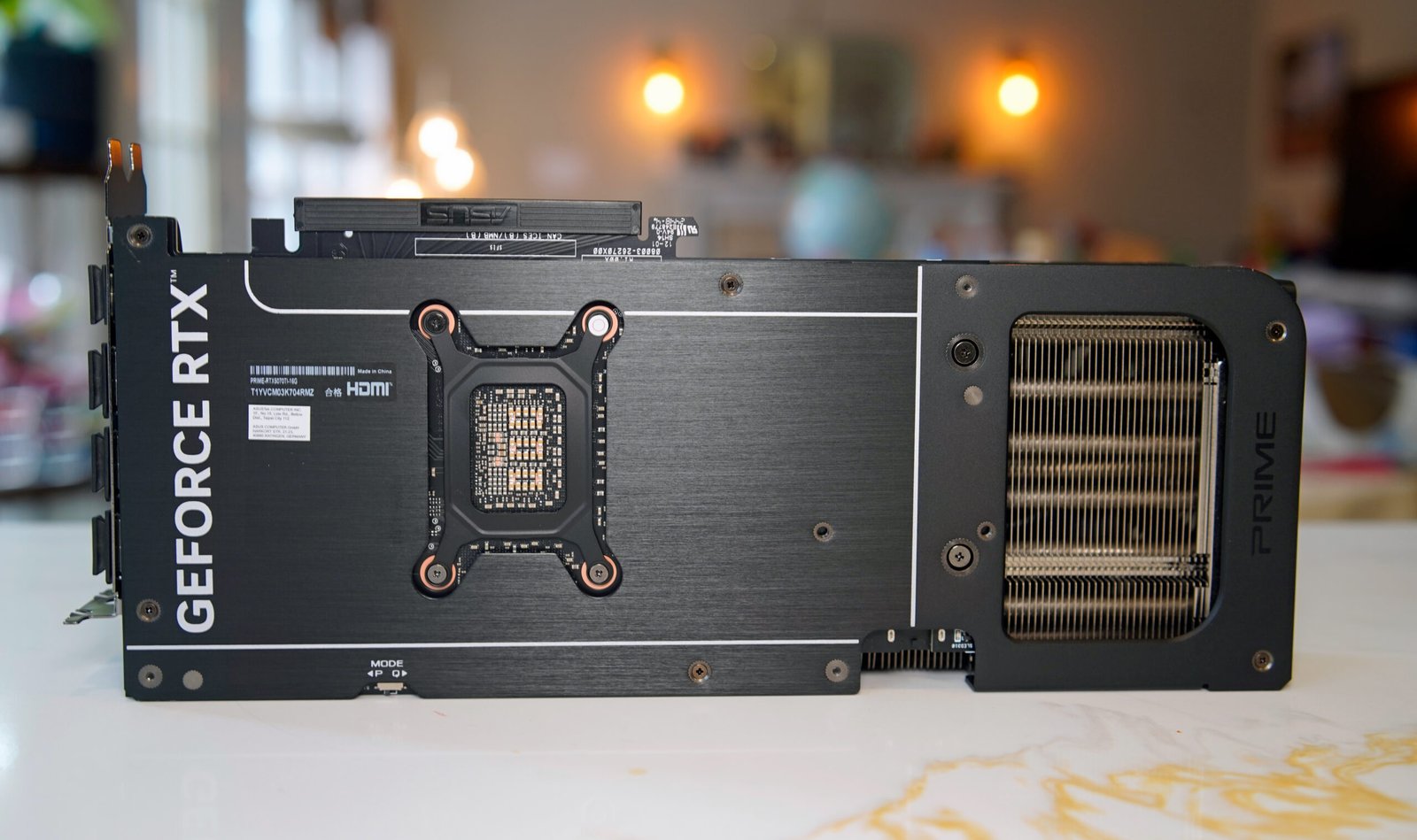
It’s honestly challenging to reminisce about the simpler times of shopping for video cards, before the surge of crypto enthusiasts, supply chain disruptions, and pandemic-induced demand skyrocketed GPU prices far beyond their manufacturer’s suggested retail prices. Ideally, I would love to inform you that NVIDIA’s RTX 5070 at $549 and RTX 5070 Ti at $749 are more reasonable options compared to the $2,000 RTX 5090 and $1,000 5080. However, the prices of RTX 5070 have already been inflated by card manufacturers and retailers, with the ASUS 5070 Ti Prime, our review unit, currently priced at $900 at Best Buy and $750 at Newegg (subject to change due to stock availability).
While I cannot guarantee the exact cost of any RTX 5070 Ti card, one thing is certain: they will undoubtedly deliver strong 4K performance at a lower cost than the RTX 5080 and 5090. If you are not urgently in need of an upgrade, it may be worthwhile to wait a few months for inventory levels to stabilize and prices to normalize.
Hardware-wise, the RTX 5070 Ti offers a good balance between performance and value in NVIDIA’s lineup, featuring 8,960 CUDA cores and 16GB of GDDR7 VRAM. Although it falls short of the 5080’s 10,752 CUDA cores, it matches it in terms of memory. The RTX 5070, on the other hand, comes with only 12GB of VRAM, which might be insufficient for 4K gaming.
The 5070 Ti is designed to fit into various gaming setups without requiring a power supply upgrade, with a peak power draw of 300 watts compared to the 5080’s 360W and the 5090’s 575W. This means the 5070 Ti can comfortably run on an 850W PSU without the need for a larger 1,000W unit.
One of the standout features of this GPU is its full support for multi-frame generation in DLSS 4, NVIDIA’s AI upscaling technology. This capability allows the GPU to generate up to 3 frames with AI for every frame rendered in real-time, leading to a smoother gameplay experience. Additionally, other DLSS 4 features are being extended to earlier NVIDIA cards, offering enhancements in ray tracing, textures, and anti-aliasing.
In terms of performance, the RTX 5070 Ti delivers solid results in 4K gaming, especially with games that support DLSS 4. Titles like Dragon Age: The Veilguard and Cyberpunk 2077 run smoothly at high frame rates with ray tracing and multi-frame generation enabled. Even in games without DLSS 4, the 5070 Ti proves to be a reliable performer, offering impressive frame rates at various resolutions.
Overall, the RTX 5070 Ti is a compelling option for gamers looking for a capable 4K card at a more affordable price point. However, it’s essential to consider your specific needs and gaming preferences before making a purchase. Waiting for prices to stabilize and exploring other options like AMD’s upcoming RDNA 4 GPUs may also be worth considering.
FUENTE