
Argentinian author Samanta Schweblin, who is releasing her stories in ‘El buen mal’ (Seix Barral), has stated, in reference to the current president of the Argentine government, Javier Milei, that going «against culture» in a country where culture has always been a place of «protection and brutal resistance», is «not very intelligent».
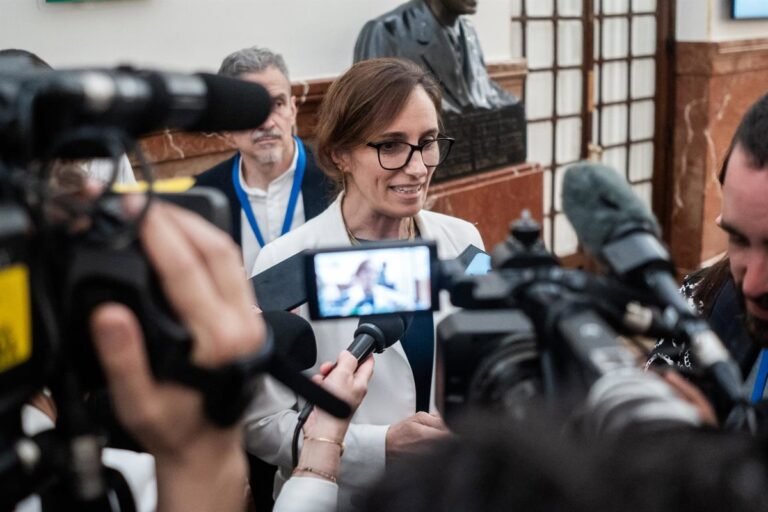
«Whether it’s a cultural battle or not depends on the measuring stick you choose to apply. If you’re thinking about this year or this cycle we’re surviving, going against culture in a country where culture has always been a place of protection and brutal resistance is not very intelligent. We’ve been through these cycles before, many times. And like the woman in this book, we stand back up. It depends on how you measure this: if we are really succumbing or just going through a rough patch,» Schweblin reflected in a meeting with the media on Monday.
In that sense, the writer — who has been living in Berlin for 12 years — lamented that Argentina is experiencing «the future», as politicians sympathetic to Milei are starting to reach executives in several other countries.
«I make a terrible joke that in Argentina we are living in the future because literally a year ago, what is about to begin here had already started there. The president himself says it, in his own words and with all calmness: it’s a cultural battle,» Schweblin added.
The author, who has been a finalist three times for the International Booker Prize, returns to her usual genre, the short story, in six tales where themes of fear, guilt, and care are very present. «I come from a family, from a tradition of the strange tale. My teachers, the Argentine authors I read, are great storytellers, as well. And especially the tale of the strange,» she explained.
FEMALE REFERENCES
These references, until recently, were male writers, but now, Schweblin acknowledges the work of female authors «that I wasn’t reading and who were writing just as well or better than them.»
«All those authors were there, and they were also writing stories, although not all were storytellers. But those who were writing stories, they were strange stories, and especially strange stories about the body. That was very present in me and I even imagined it was something of my own, crazy, that only the body occurred to me. And yet, that tradition also existed,» she detailed before mentioning names like Silvina Ocampo, Sara Gallardo, Norah Lange, María Luisa Bombal, or Elena Garro.
Despite celebrating her immersion in the work of many female writers, she assured that it was not «forced» and rejected the idea that «the best writing today is being done by women.»
«I don’t quite agree with that. Women until very recently represented a minority in the literary world. Any minority that breaks into a canon brings novelty, new stories, things that were not talked about before, new perspectives. And that is read with a freshness, a devotion, a desire, a need, that makes it seem like it’s in that place, but not because they write better,» she pointed out.