MADRID, 21 Apr. (EUROA PRESS) –
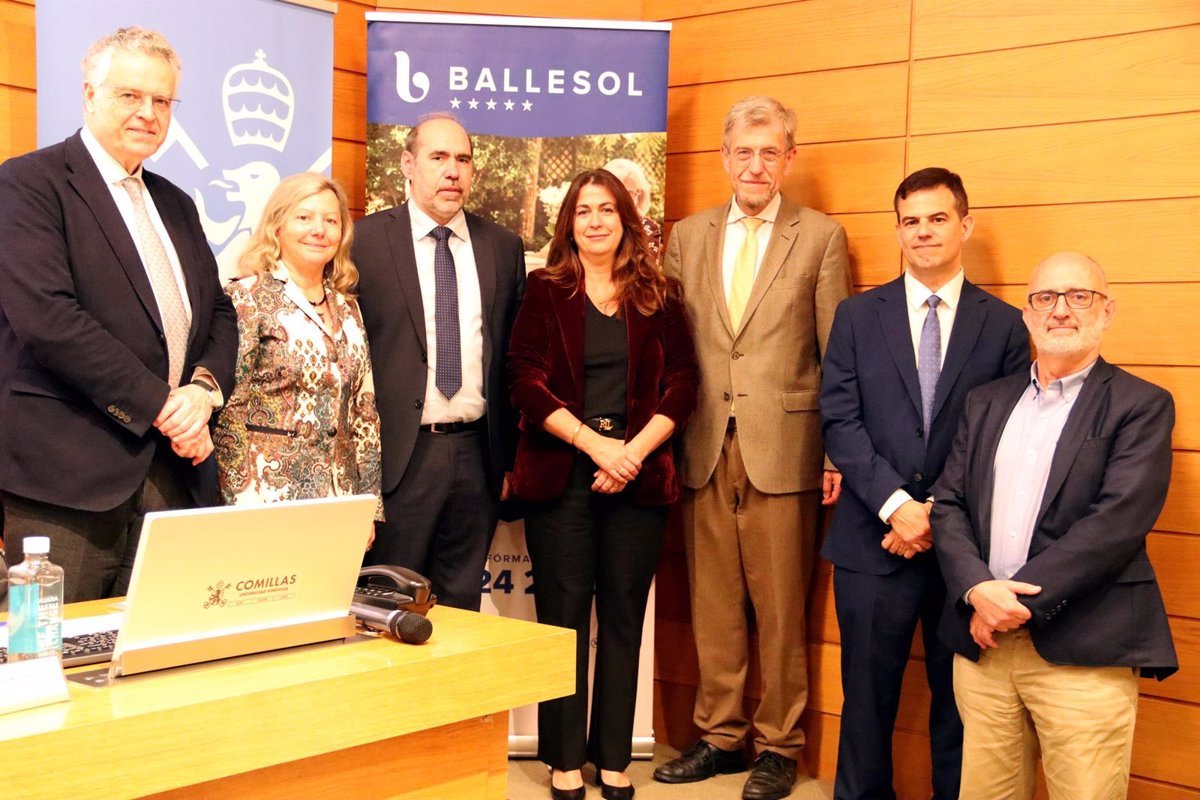
Experts have warned of the challenge that will be to attend to dependent people in a context where they foresee «more expensive care and outdated infrastructures». This was expressed at the VI Conference ‘Bioethics of spaces and residential models’, organized by the Pontifical University of Comillas and Ballesol.
Specifically, the founder of Inforesidencias, Josep de Martí, has referred to the importance of adapting the model to what can be paid. «The upcoming tsunami will leave more dependent people» and has appealed to the need to focus «on employees because residents will be guaranteed.» «What will cost us is finding people who want to work,» he added.
On the other hand, David Cantarero, associate professor at the University of Cantabria in the Area of Applied Economics, has shared with the more than 200 attendees at these two conferences a vision from the health economics in residential models.
In his opinion, there are ethical challenges in the practice of care such as «access to health care should not be considered a market product, but a right inherent to all people,» also referring to the fact that «medical care should be available regardless of the economic level of those who need it.»
He also warned of some risks such as the fact that «with 20% of the population over 65 years old and 8%-10% dependent and about 500,000 people living in residential care and other variables to consider, the economic impact of care models could amount to 15 billion euros in the coming years.»
Another intervention at the conference of the University of Comillas and Ballesol was that of Josep Verges, president of the Osteoarthritis Foundation International (OAFI), who provided some relevant data such as «20% of people who have suffered a fracture die in the first year and by 2034 the number of fractures will increase by 30%, reaching 370,000 cases in Spain.»
In his view, this is a trend that «will lead the patient to live in residential care rather than hospitals because the system cannot cope with the current medical situation.» Dr. Vergés concluded his intervention with advice: «Reaching old age with good quality of life depends on appropriate joints and muscles, otherwise it leads to obesity, hypertension, diabetes.»
From the perspective of Architecture for care, the Director of Real Estate Management for the Ballesol Elderly Residences, Carlos Lera, detailed the impact that design or distribution of a residential care center can have on this group.
«The spaces we inhabit can condition and facilitate life, or poor architecture can hinder it. That is why the ethical perspective of architectural design is to try to achieve enabling environments considering the specific needs of each person,» he argued.
He also emphasized «active listening, thinking that life does not end in the residence, that there is a balance between secure, accessible spaces, freedom, and socialization against unwanted loneliness.»